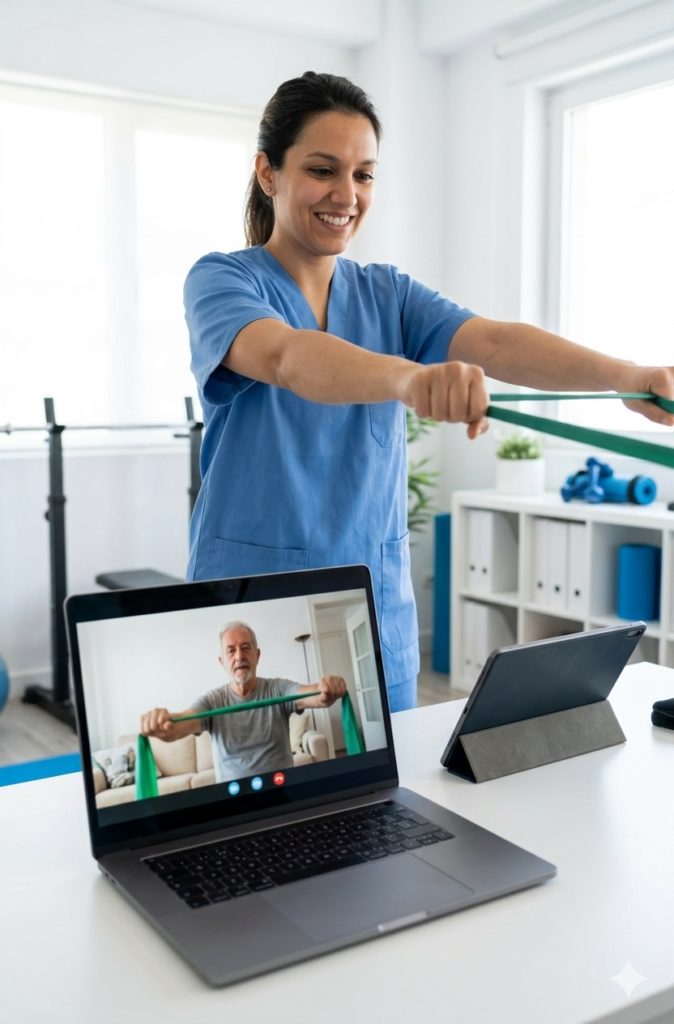
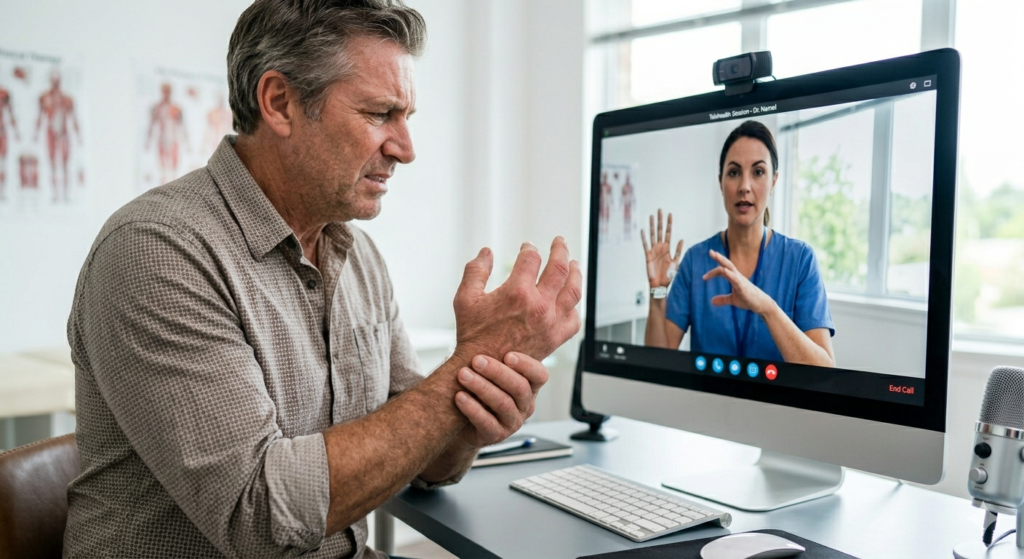
Our Tele-physiotherapy is one of the best in India and it doesn’t feel heavy on your pocket either. Our approach is simple yet proved to be effective and convenient for most of the cases. We stay in touch with our patients on a regular basis through follow ups.
At my physio space, we share insights and tips to help you move better and feel stronger every day through weekly blogs. We share the knowledge about injury, health and healthcare that will save you your time and money. We give Virtual Consultations, Sessions and Lessons. You can receive our expertise anytime anywhere from the convenience of your home.
She is a Senior Physiotherapist who has an overall experience of 7+ years in her field of expertise. She has dealt with all kinds of orthopaedic, geriatric, musculoskeletal, neurological and sports injury cases. She has previously worked in Max healthcare, Apollo Hospital chain and many more known healthcares of Delhi NCR. She has also worked in many sports events which has given her impeccable sense of diagnosis and on-field management.She did her graduation and post graduation from Manav Rachna International University, Faridabad.
“I firmly believe in the diagnosis of the condition before the treatment. Following the diagnosis, finding out what causes it plays an equally important role. Treatment after this is a piece of cake.”
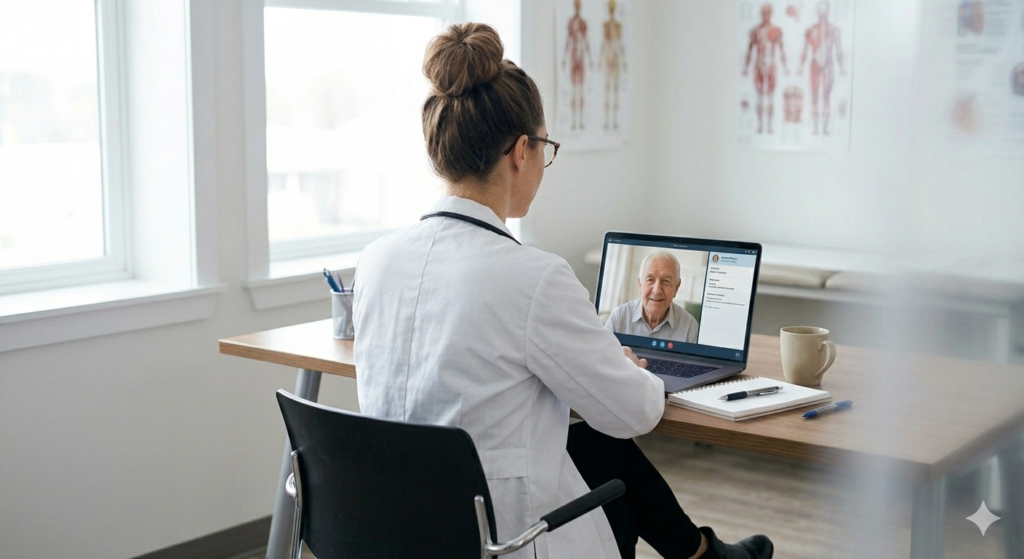
We give Virtual Consultations in which we provide assessment, prescription and Home exercise program.
2. Tele Session
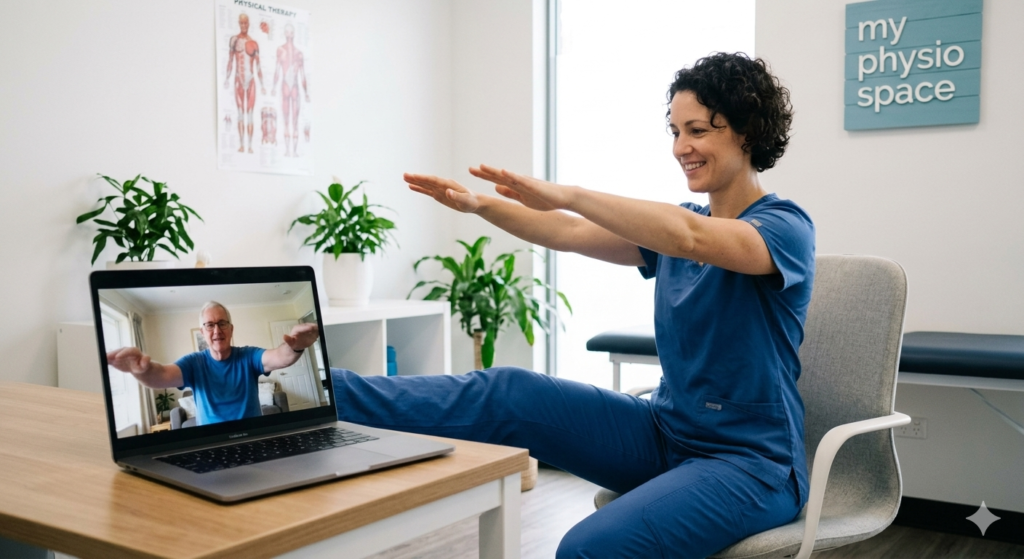
We give Virtual Sessions in which we help you exercise with your home equipments and explain you how you have to manage your pain using pain management modalities and techniques.
3. Tele Lesson
We give virtual Lessons on anatomy, biomechanics and exercise therapy.
Virtual physiotherapy (often called tele-rehab) has become incredibly popular, and research shows it can be just as effective as in-person visits for many musculoskeletal conditions. Since the therapist can’t use their hands to manipulate your joints, the process relies heavily on guided movement, visual assessment, and patient education.
1.Setting the Stage:-
Before your appointment, You will need to fullfill a pre-requisite which involves -a device with a camera (a laptop or tablet is best so you can step back) and enough floor space to move around. Wear form-fitting athletic clothing — the therapist needs to be able to see the angles of your joints and how your muscles engage without baggy fabric getting in the way.
2. The Subjective Assessment:-
This is the interview phase in which the consultation starts with a detailed conversation. The physiotherapist will ask about your medical history, how and when your injury started, what movements trigger your pain, and what your personal recovery goals are (e.g., “I want to be able to lift my grandchild” or “I want to run a 5K”).
3. The Objective Assessment:
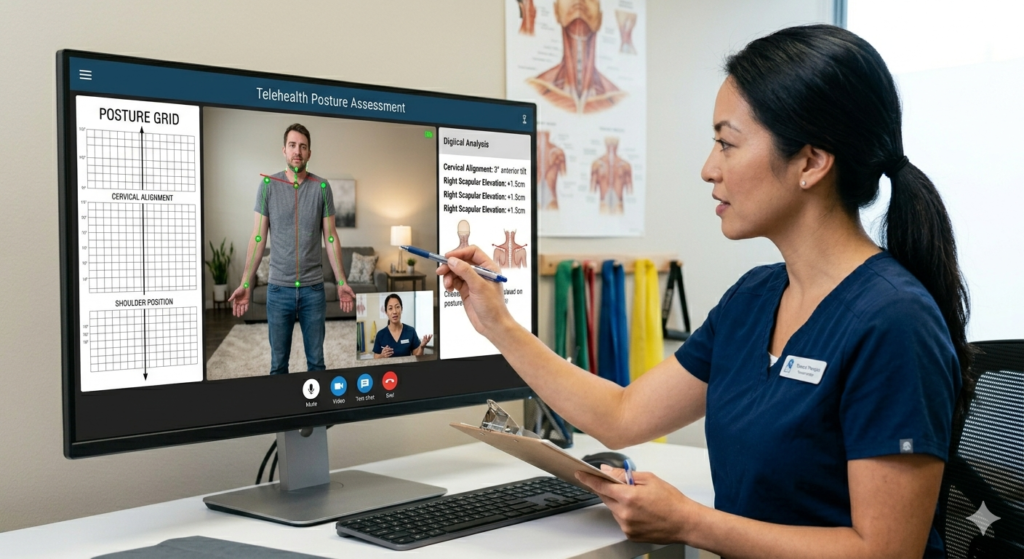
This is your Movement screening stage where the therapist will ask you to step back so your full body is in the frame. They will guide you through a series of specific movements — like squats, arm raises, balancing on one leg, or bending over. They are looking for asymmetries, limited range of motion, and compensatory movement patterns.
4. Diagnosis and Treatment Plan:-
This is where the therapist start Building your program based on the movement screen, the therapist will explain your diagnosis. They will then teach you 2 to 4 initial exercises. You will perform these exercises live on camera so the therapist can correct your form in real-time. Afterward, they will typically send you your prescription and Home exercise program through emails for your daily routine.
5. Follow-Up Sessions:-
This is the stage for Progression and adaptation. Our First follow up after your Consultation is free to see your progress. You can take up the subsequent sessions that usually last 30 to 45 minutes each. You will review how your symptoms have changed and demonstrate your exercises. The therapist’s primary job here is progression — making the exercises harder as you get stronger, or modifying them if something is causing a pain flare-up. They will also introduce new movements to keep challenging your body.
The biggest advantage of virtual physio is that the therapist gets to see how you move in your actual home environment, which makes it easier to suggest ergonomic tweaks to your real-life desk setup or living room.
Why choose us?
Online physiotherapy forces the practitioner to rely heavily on active movement, education, and self-management strategies—which studies consistently show are the most effective long-term drivers of recovery.
1.Practical Convenience and Comfort-Time Efficiency:
A 45-minute appointment online takes exactly 45 minutes of your day. An offline appointment can easily eat up two to three hours when you factor in getting ready, commuting both ways, and sitting in the waiting room.
2. Easier Scheduling:
Telehealth often provides much more flexible booking times, making it easier to squeeze a session into a lunch break or between meetings without disrupting your entire day.
3. Overcoming Mobility Barriers:
If you are dealing with severe pain, recovering from surgery, or have a disability, simply traveling to a clinic can be an agonizing, exhausting barrier to getting care. Online consults bring the care directly to you.
4. Health and Safety-Infection Control:
Waiting rooms are shared spaces. Online consultations eliminate the risk of picking up seasonal flus, colds, or other contagious illnesses from fellow patients.
5. Energy Conservation:
Healing requires energy. Instead of burning your energy reserves on the logistics of travel, you can channel 100% of it into your physical therapy exercises and recovery.
When a physiotherapist watches you via video, they can see exactly how you move in your natural environment. They can check your actual work-from-home desk setup, see the couch you usually sit on, or watch how you navigate your own stairs.
7. Sustainable Habit Building:
You have to do your rehab exercises at home anyway. Learning them using your own furniture and floor space (rather than specialized clinic equipment you don’t own) makes it much easier to stick to your routine and ensures you are doing them correctly in the space where you’ll actually be practicing.