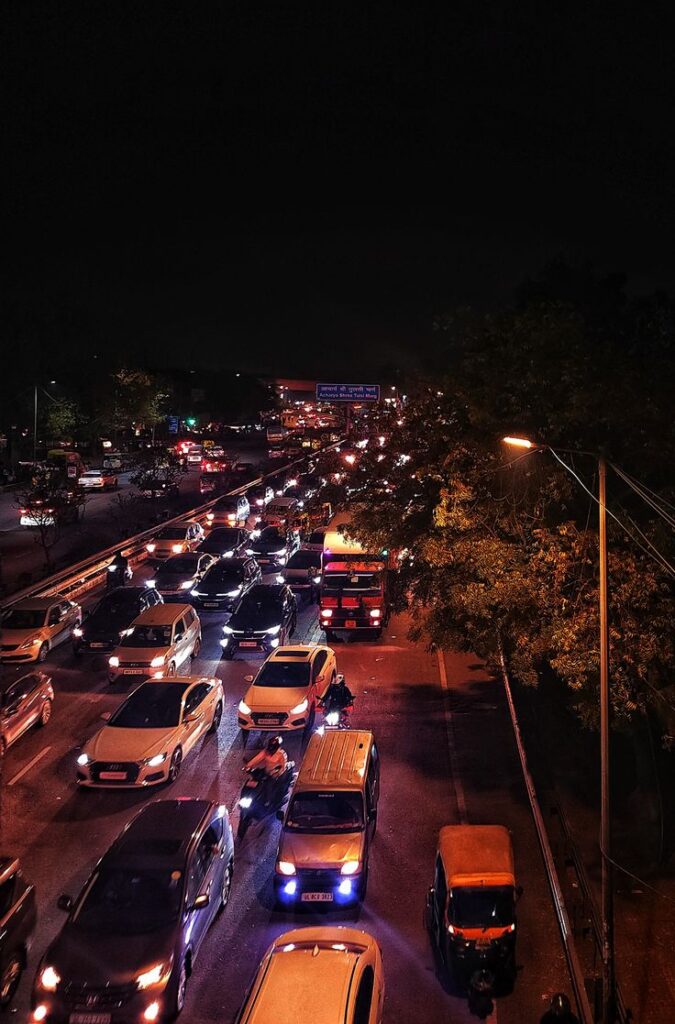
The “Clutch Leg” Epidemic
If you commute in major Indian cities like Bengaluru, Mumbai, or New Delhi, you are likely intimately familiar with the grueling reality of bumper-to-bumper traffic.
But beyond the mental frustration, there is a physical toll that many drivers quietly endure: a nagging, burning, or sharp pain radiating down the left leg, deep into the left hip, and wrapping around the lower left side of the back.
Why is it the left side most of the time?
It is not a coincidence, nor is it just “getting older.” It is the result of a perfect storm unique to our driving conditions:-
-right-hand drive vehicles
-a heavy reliance on manual transmissions
-unpredictable stop-and-go traffic,
-and poor driving ergonomics.
The Culprit: Manual Transmissions and “Stop-and-Go” Warfare. While automatic cars are steadily gaining popularity, the vast majority of cars on Indian roads are still manuals. Driving a stick shift on an open highway is a joy; driving it in heavily congested urban traffic is an intense, localized physical workout.
Think about the biomechanics of driving a manual car. Your right leg has a relatively easy job. It rests its heel on the floorboard and pivots gently between the accelerator and the brake. It is a small, controlled movement. Your left leg, however, is tasked with performing hundreds of deep, forceful leg presses every single commute.
Pressing a heavy clutch requires engaging the entire leg—from the glutes down to the calves—and pushing against a heavy spring mechanism. In Indian cities, driving isn’t a steady cruise; it’s a constant, unpredictable negotiation. Sudden speed breakers, potholes, and weaving two-wheelers mean you are perpetually riding the “bite point” of the clutch. This half-clutching technique, essential for creeping forward in first gear, requires tremendous fine motor control and prolonged isometric holds, which ultimately sets your leg muscles on fire.
The Anatomy of the Pain: What is Actually Happening?
To understand the pain, we have to look at how the body reacts to the unnatural, asymmetrical demands of operating a clutch pedal for hours on end.
1. The Psoas and Hip Flexor Strain
When you sit down, your hip flexors (specifically the psoas and iliacus muscles) contract to keep your torso upright. When you drive a manual, your left leg is constantly hovering over the clutch or lifting to press it. This keeps the hip flexors in a state of perpetual, shortened tension. Over time, these muscles form painful knots and begin to pull tightly on your lower spine, leading directly to lower back pain.
2. Pelvic Misalignment
Pressing the clutch to the floorboard requires significantly more force than tapping the brake. To get enough leverage, drivers often subconsciously shift their weight, leaning slightly to the right or pushing their left hip forward. This asymmetrical movement twists the pelvis. Over months and years, this constant pelvic tilt strains the sacroiliac (SI) joint and the lower lumbar spine, resulting in localized left-sided back pain.
3. Piriformis Syndrome and “Sciatica”
The deep gluteal muscles, particularly the piriformis, have to engage to stabilize your hip every time you push that heavy clutch pedal down. When this muscle gets overworked, inflamed, and tight, it can press against the sciatic nerve, which runs right beneath it. This sends shooting pains, tingling, or a dull ache down the back of your left thigh—a condition often mistaken for a spinal disc issue.
Bad Habits That Make the Pain Worse
1. “Riding” or Hovering Over the Clutch:
In chaotic traffic, drivers often keep their left foot hovering right over the pedal, ready to engage it at a millisecond’s notice. This means the leg muscles never actually get to rest.
2. Ignoring the Dead Pedal:
Many cars come with a “dead pedal” (a slanted footrest to the far left), but drivers rarely use it, preferring to keep their foot flat on the floorboard.
3. The “Wallet Sciatica”:
A surprisingly common habit is keeping a thick wallet in a back pocket while driving. This acts like a wedge, artificially raising one side of your pelvis and forcing your spine to curve to compensate.
4. Barefoot Driving:
Many Indian drivers prefer driving barefoot, thinking it gives them a better “feel” for the clutch’s bite point. However, without the stiff sole of a shoe to distribute the resistance, the foot has to work much harder to push the pedal, leading to plantar fasciitis and radiating leg fatigue.
How to Fix the “Clutch Leg” Syndrome
You might not be able to fix the city traffic, but you can absolutely fix how your body handles it. Here are actionable steps to relieve and prevent left-sided driving pain:
1. Fix Your Seating Position
– Distance: Adjust your seat so that when you press the clutch all the way to the floor, your left knee still has a slight bend. If your leg is locking out straight, you are sitting too far back, which forces you to awkwardly twist your hips to reach the pedal.
-Angle: Recline your backrest to about 100 to 110 degrees. Sitting completely bolt-upright (90 degrees) places maximum vertical compression on your spinal discs.
-Height: If your seat is height-adjustable, raise it so your hips are parallel to or slightly higher than your knees. This opens up the hip angle and relieves tension on the overworked psoas muscle.
2. Embrace Neutral Gear
At red lights or dead stops in traffic jams, do not sit there holding the clutch down in first gear. Shift into neutral, release the clutch completely, and place your foot firmly on the dead pedal. This saves your car’s throw-out bearing from premature wear, but more importantly, it gives your hip flexors a much-needed rest.
3. Use Proper Lumbar Support
Most standard car seats lack adequate lower back support, causing your spine to slump into a “C” shape over long drives. If your car doesn’t have adjustable lumbar support built-in, invest in a dedicated memory foam cushion, or simply roll up a small towel and place it behind the small of your back. This preserves the natural “S” curve of your spine.
4. Empty Your Pockets and Wear Good Shoes
Before you start the engine, take your phone, keys, and wallet out of your back pockets. You need a completely flat, symmetrical surface for your pelvis to rest on. Furthermore, ditch the barefoot driving and avoid wearing loose flip-flops. Wear thin-soled, closed-toe shoes (like driving loafers or lightweight sneakers). A firm sole spreads the resistance of the clutch pedal across your entire foot.
5. Consider an Automatic Transmission
At the end of the day, if you have chronic left hip and back pain and spend upwards of two hours a day commuting, it might be time to rethink your vehicle choice. The rising popularity of AMTs, CVTs, and torque converters in the Indian market isn’t just about luxury—it is a massive ergonomic upgrade. Removing the clutch pedal entirely allows you to plant your left foot firmly on the dead pedal for the entire journey, locking your pelvis into a stable, symmetrical position.
Driving in India is demanding enough on your mind; it shouldn’t break down your body. By understanding the physical asymmetry of driving a manual car and actively correcting your posture, you can take the pain out of your daily drive.
Contact Us:-
@drpriyanka-sportsphysio14gmail-com