
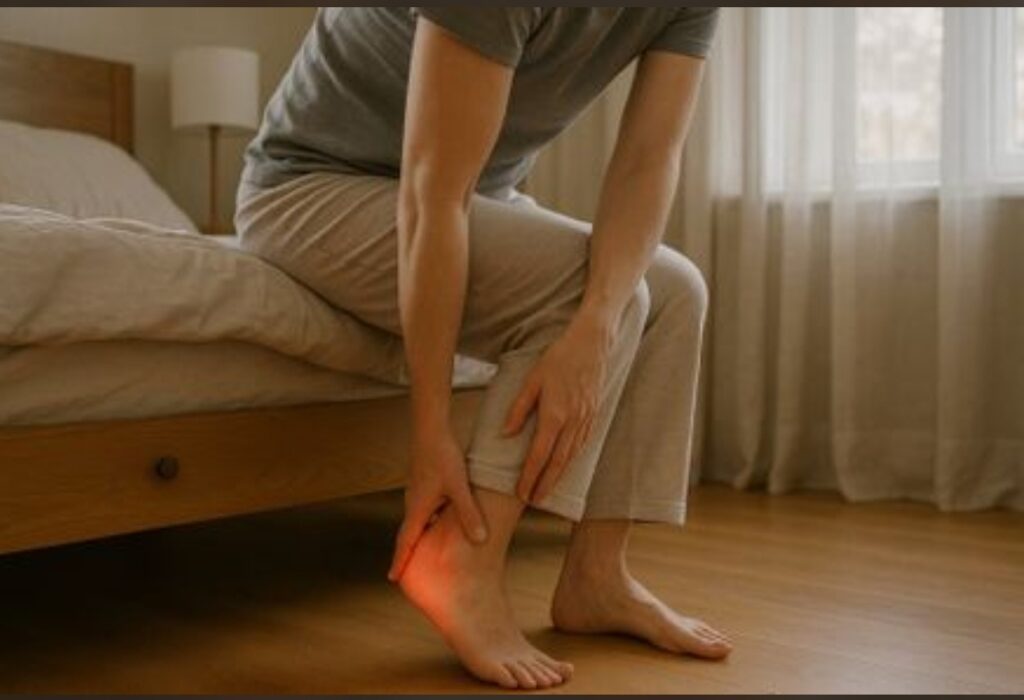
You open your eyes, stretch your arms, and swing your legs over the edge of the bed. You are ready to tackle the day. But the moment your feet hit the floor and you put your weight on them, a sharp, stabbing pain shoots through the sole of your foot. You hobble to the bathroom, favoring one leg, waiting for the stiffness and agony to gradually fade as you move around.If this scenario sounds familiar, you are not alone. Morning foot pain is a remarkably common complaint that sends thousands of people to podiatrists and orthopedic specialists every year. It can feel like walking on glass, a deep aching bruise, or an intense, tight burning sensation along the arch and heel.While the pain might slowly ease as you go about your morning, ignoring it can lead to chronic, debilitating issues that affect your mobility, your posture, and your overall quality of life.
To truly understand how to fix this pain, we first need to explore the incredible biomechanics of the foot, identify the usual suspects causing the inflammation, and learn exactly why the morning hours are the most painful.
The Biomechanical Marvel of the Human Foot
To understand why your foot hurts, it helps to understand what it does. The human foot is an engineering masterpiece. Each foot contains 26 bones, 33 joints, and over 100 muscles, tendons, and ligaments. These structures work in perfect harmony to support your entire body weight, absorb the shock of your steps, and propel you forward.When you walk or run, the forces passing through your feet can be up to three times your body weight. The foot manages this stress primarily through its arches (the medial, lateral, and transverse arches). Supporting the main arch is a thick, web-like band of fibrous tissue called the plantar fascia.This band connects your heel bone (calcaneus) to your toes, acting like a shock-absorbing bowstring. As you put weight on your foot, the arch flattens slightly, stretching the plantar fascia. When you push off, it springs back, helping you move. But when this bowstring is subjected to too much stress, the system breaks down.
The Primary Suspect: Plantar Fasciitis
If you are experiencing sharp, stabbing heel or arch pain first thing in the morning, the overwhelming statistical probability is that you are suffering from plantar fasciitis. Affecting roughly 1 in 10 people at some point in their lives, this condition is characterized by the inflammation, irritation, or degeneration of the plantar fascia.Despite the “itis” in its name (which implies active inflammation), modern medical research shows that chronic plantar fasciitis is often more of a degenerative condition—a breakdown of the collagen fibers in the tissue due to repetitive micro-tearing.
The plantar fascia is a thick, web-like band of ligament tissue that runs across the bottom of your foot. It connects your heel bone (calcaneus) to the base of your toes. Think of it as a rubber band or a bowstring that supports the arch of your foot and acts as a major shock absorber when you walk or run.When this “bowstring” is placed under too much tension, it develops tiny micro-tears. The body responds with inflammation, causing sharp pain. Over time, continuous tearing and inadequate healing lead to degeneration of the collagen fibers, making the tissue thick, stiff, and highly sensitive.This is why the pain is worst in the morning: while you sleep, the fascia heals in a relaxed, shortened state. Your first step forces it to stretch rapidly, tearing the newly healed tissue all over again.
The Root Causes
Plantar fasciitis is rarely the result of a single injury. It is almost always an “overuse” or cumulative stress injury driven by one or more of the following factors:
1. Foot Mechanics: Having flat feet (overpronation) or overly high arches alters the way weight is distributed across your foot, putting excess mechanical strain on the plantar fascia.
2.Activity Spikes: A sudden increase in physical activity—such as jumping into a new running routine, adding miles too quickly, or doing a lot of plyometrics (jumping)—can overload the tissue before it has time to adapt.
3. Occupation: Jobs that require long hours of standing or walking on hard surfaces (teachers, nurses, factory workers, retail staff) are a massive risk factor.
4. Age and Biology: It is most common between the ages of 40 and 60, as tissues naturally lose some elasticity over time. Carrying excess body weight or experiencing rapid weight gain (like during pregnancy) also exponentially increases the force placed on the arches.
5.Improper Footwear: Wearing worn-out athletic shoes, high heels that shorten your Achilles tendon, or unsupportive flip-flops forces your foot to work overtime to stabilize itself.
Why Does It Hurt Specifically in the Morning?
This is the most common question patients ask:
“If I injured my foot during the day, why is the pain at its absolute worst after eight hours of rest?”
The answer lies in the biology of healing and the physical position of your body as you sleep.
1. The Sleeping Position: When you sleep, your feet naturally fall into a relaxed, slightly pointed position (plantar flexion). Because there is no weight on the foot, the arch isn’t being flattened. In this position, the plantar fascia is slack.
2. Overnight Healing: While you sleep, your body’s immune and repair systems go into overdrive. Your body starts laying down new collagen to patch up the micro-tears you created in your plantar fascia the day before. However, because your foot is pointed and the fascia is relaxed, this new tissue is laid down in a shortened, contracted state.
3.The First Step: When you wake up, get out of bed, and put your foot flat on the floor, you instantly apply a massive amount of tension to the plantar fascia. The arch flattens under your body weight, violently stretching the tissue. That sharp, tearing pain you feel is quite literally the newly healed, shortened tissue being ripped open again.As you walk around, the fascia gradually warms up, stretches out, and becomes more flexible, which is why the pain typically subsides after 10 to 15 minutes of movement. However, the cycle of micro-tearing and inflammation has already restarted.
Treating the Pain: Immediate and Long-Term Strategies
Treating plantar fasciitis requires a two-pronged approach: calming the immediate inflammation and fixing the underlying mechanical stress.
1. Reduce the Load and Inflammation
–Stop Going Barefoot: Walking barefoot on hard floors completely collapses your arch, maximizing strain. Wear supportive slippers, recovery sandals (like OOFOS or Hoka), or structured shoes from the moment you get out of bed.
–Ice and Massage: Freeze a small water bottle and roll it back and forth under the arch of your foot for 10-15 minutes at the end of the day. This provides both cold therapy (to reduce inflammation) and a deep tissue massage.
2. Stretch the Fascia and Calves
Because the calf muscles connect to the heel bone via the Achilles tendon, a tight calf pulls aggressively on the heel, which in turn strains the plantar fascia. Daily stretching is mandatory for recovery.
–The Wall Stretch:-Targeting the calf musclesStand facing a wall with your hands flat against it. Step one foot back, keeping the back leg straight and the heel flat on the floor. Bend your front knee and lean forward until you feel a deep stretch in the back calf. Hold for 30 seconds. Do 3 reps per leg.
–Seated Fascia Stretch:- Best done before getting out of bedCross your painful foot over your opposite knee. Grab the base of your toes and gently pull them backward toward your shin until you feel a tight stretch in the arch. Hold for 30-45 seconds.
–Towel Scrunches:- To strengthen the intrinsic foot muscles. Place a small towel flat on the floor. While seated, use your bare toes to grab and scrunch the towel toward you. This builds the small muscles that support your arch, taking the load off the fascia.
3. Footwear and Orthotics
Switch to shoes that offer a thick, shock-absorbing midsole, a firm heel counter (the back of the shoe shouldn’t collapse easily), and excellent arch support. Over-the-counter orthotic inserts (like Superfeet or Powerstep) can provide the arch support your shoes might lack. If standard inserts don’t help, a podiatrist can create custom orthotics molded precisely to your feet.
4. Advanced Medical Interventions
If conservative treatments (stretching, icing, shoes) don’t resolve the pain after several months, a doctor may recommend:
–Night Splints: A brace worn while sleeping that keeps the foot flexed at 90 degrees, preventing the fascia from shortening overnight.
–Physical Therapy: Targeted therapy to correct gait imbalances and strengthen weak hip and leg muscles that contribute to foot strain.
–Corticosteroid Injections: A powerful anti-inflammatory shot into the heel for rapid, though temporary, pain relief.
-Extracorporeal Shockwave Therapy (ESWT): Sound waves used to stimulate blood flow and healing in chronic cases.
–Surgery: In very rare cases (less than 5%), a surgeon can partially cut the plantar fascia to permanently release the tension.
Recovery from plantar fasciitis requires patience—it often takes 6 to 12 months for the tissue to fully remodel and heal. The key is consistency with your supportive footwear and stretching routines.